Synastry Houses: How House Overlays Work
A house overlay happens when a planet of one person falls in a house of the other person's birth chart. It shows which area of life that planet touches, and the reading works both ways.
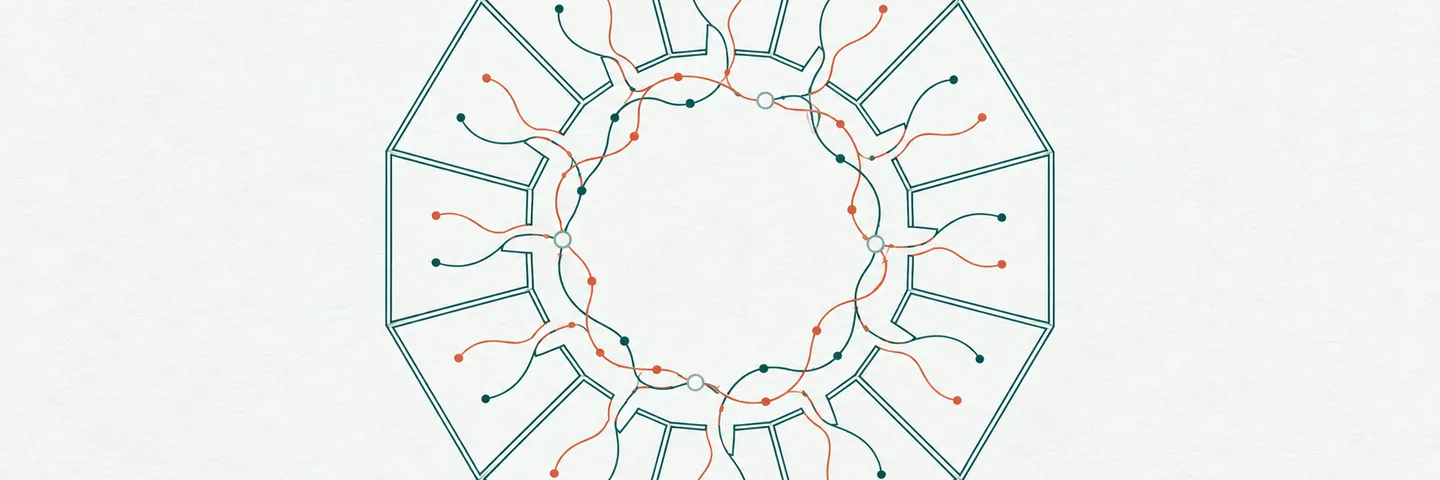
The twelve houses
A house overlay is where one person's planet falls in the other person's chart. Each house is a different area of life.
1st house
Angular · self, body, first impressions
Overlays in the 1st house2nd house
Succedent · money, belongings, self-worth
Overlays in the 2nd house3rd house
Cadent · communication, siblings, short trips
Overlays in the 3rd house4th house
Angular · home, family, roots
Overlays in the 4th house5th house
Succedent · romance, play, creativity
Overlays in the 5th house6th house
Cadent · daily routine, work, health
Overlays in the 6th house7th house
Angular · partners, commitment, one-to-one bonds
Overlays in the 7th house8th house
Succedent · shared money, intimacy, deep trust
Overlays in the 8th house9th house
Cadent · beliefs, travel, higher learning
Overlays in the 9th house10th house
Angular · career, reputation, public life
Overlays in the 10th house11th house
Succedent · friends, groups, hopes
Overlays in the 11th house12th house
Cadent · privacy, hidden worries, solitude
Overlays in the 12th house
How a house overlay works
Synastry is a way of comparing two birth charts to describe how their themes meet. Each chart has 12 houses, and each house relates to an area of life. The 1st house covers self, body and first impressions; the 4th house covers home, family and roots; the 7th house concerns partners and one-to-one bonds. A planet in another person's house brings its themes into that area.
Three kinds of house
An angular house sits on a main chart point, so its themes tend to show clearly and be felt right away; the 1st, 4th, 7th and 10th houses are angular. A succedent house follows an angular house and concerns what people build, keep and sustain; the 2nd, 5th, 8th and 11th houses are succedent. A cadent house comes before an angular one and concerns adjusting, learning and exchanging; the 3rd, 6th, 9th and 12th houses are cadent.
Birth time and house system
The birth time of the person whose houses are used is needed to place the house cusps. Without that person's birth time, the chart has no houses for this reading. The calculator uses Placidus houses, with Porphyry houses for places too far north or south for Placidus. Each house page gives ten short readings, one for each planet from the Sun to Pluto, so the same house is considered through different planetary themes.
Questions
What are house overlays in synastry?
House overlays show where one person's planet falls in the other person's birth chart. The house points to an area of life, while the planet describes a theme brought into it. The reading describes emphasis, not a fixed result for the two people.
Which house is most important in synastry?
No single house is most important for every pair. Different houses describe different areas of life, and the meaning depends on which planet falls there and how the rest of the charts read. One overlay alone does not sum up a relationship.
Do I need the birth time for house overlays?
Yes, the birth time is needed for the person whose houses are being used, because it sets the house cusps. A reading can still be made in the other direction if that person's birth time is known, since the two directions use different house lists.